How to choose an Amazon PPC software: A beginner’s guide to smarter ad decisions

8 min read
News




TL;DR
Amazon PPC can be confusing for beginners because Amazon displays a lot of data but little context, making it difficult to connect actions to results.
PPC software helps by organizing data, spotting patterns early, and reducing guesswork, not by delivering instant results.
Manual PPC management becomes stressful and error-prone as accounts grow, whereas software provides consistency and faster reaction times.
Beginners often make mistakes by over-automating, expecting quick wins, or choosing tools that do not explain their actions.
The best PPC tools focus on keyword visibility, controlled bid adjustments, simple reporting, and scalability.
BidBison supports smarter PPC decisions by improving clarity, consistency, and control without replacing seller strategy.
Have you ever opened Amazon Ads, made a few changes, and then wondered why results moved in the opposite direction?
For many sellers, PPC feels less like optimization and more like constant trial and error. You adjust bids, pause keywords, tweak budgets, and still walk away unsure if you actually improved anything. The problem is not effort or intent.
Most beginners are actively managing their ads, but without a clear system to guide decisions. Amazon shows plenty of data, yet very little context. That gap is where confusion starts, and ad spend quietly erodes profits.
This guide is built for sellers who want clarity before control. It breaks down what Amazon PPC software is meant to solve, how to evaluate it step by step, and how to avoid common mistakes early on. If your goal is to make smarter, calmer, and better decisions instead of reacting daily, this is the right place to start.
Why does Amazon PPC feel confusing for beginners?
It is confusing for beginners because it throws too much information at you before it gives you clarity. One day your ads are spending, the next day sales slow down, and nothing clearly explains why. You see metrics like ACoS, CTR, CPC, impressions, placements, and match types, but no simple way to connect them to real outcomes.
Most new sellers are actively adjusting bids, tweaking budgets, and checking reports, often daily. The frustration comes from not knowing which change actually mattered. You lower bids to control spend, and sales drop. You raise bids to get visibility, and costs jump. Results feel inconsistent and hard to predict.
The real issue is not effort; it is structure. Amazon shows data in pieces, not as a complete story. Without visibility into what is driving spend and conversions, PPC becomes unpredictable. That uncertainty is what makes ads feel overwhelming, even when you are doing everything right.
What Amazon PPC automation software actually helps sellers fix?
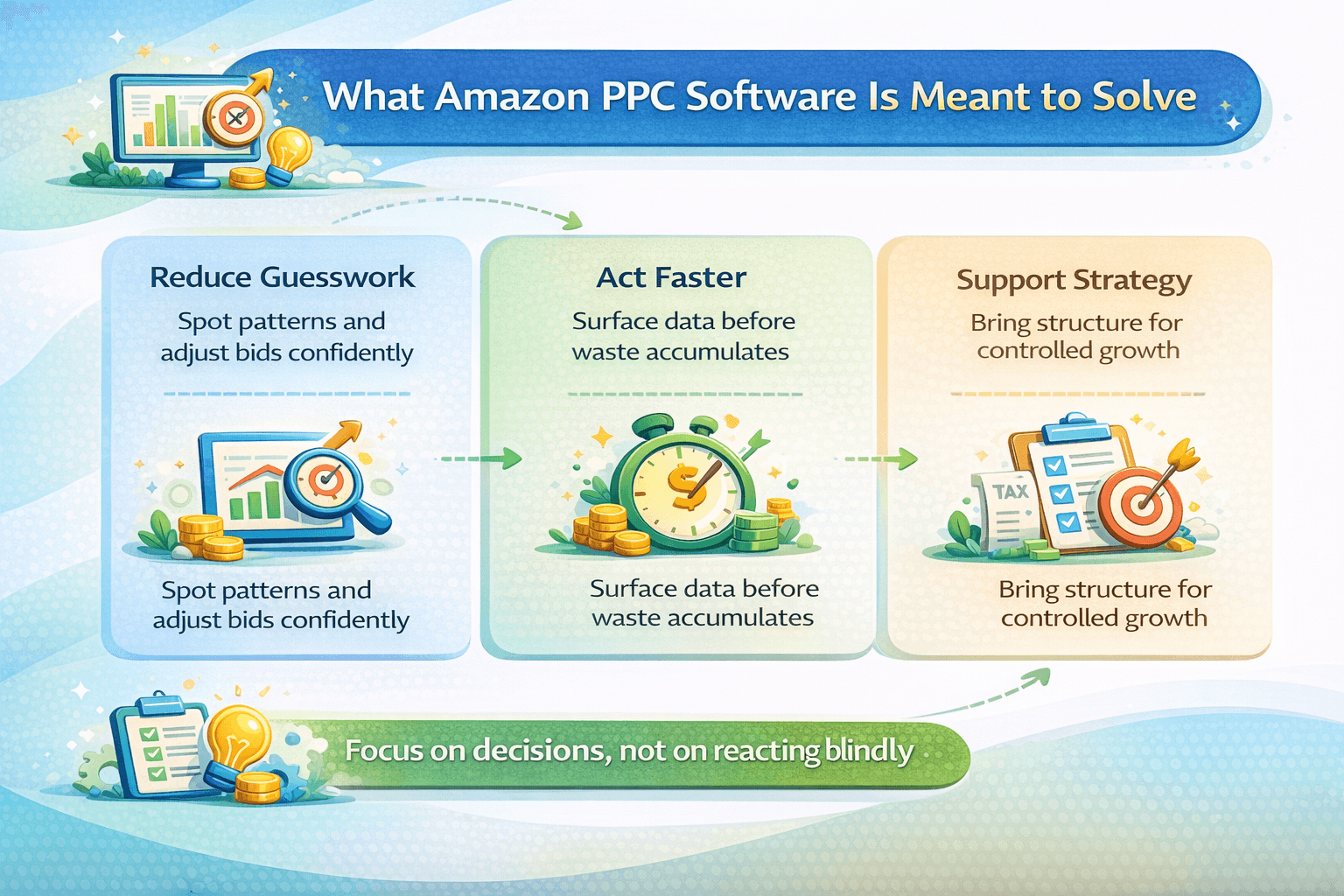
Amazon PPC management software is not meant to be a magic switch that instantly fixes your ads. Its real job is much more practical.
Instead of staring at reports and making decisions based on instinct, the software highlights patterns that are hard to spot manually. Which keywords are slowly draining the budget, which search terms are quietly converting, and where bids are misaligned with performance.
For most sellers, the biggest challenge is timing. By the time you notice a problem, money has already been spent. PPC software shortens that gap. It surfaces signals faster and helps you act before small issues turn into expensive ones.
What it should not do is replace strategy. You still decide your goals, margins, and growth pace. The best PPC software supports those decisions by bringing structure and consistency. It helps you respond with confidence, not react blindly.
When used correctly, it does not promise overnight ACoS drops. Instead, it acts as a tool to improve Amazon PPC sales conversion by supporting smarter, more controlled ad decisions over time.
Manual PPC management vs PPC research tool
Aspect | Manual PPC management (spreadsheets) | Software-assisted PPC management |
Time spent | Requires regular downloads, sorting data, and updating sheets manually. Most sellers spend hours just preparing data before any decision is made. | Reduces prep work by organizing data automatically, so time is spent on decisions instead of data cleanup. |
Consistency | Changes depend on memory, availability, and mood. Missed days or rushed updates often lead to uneven results. | Applies the same logic every day, keeping bids and budgets consistent even when you are not logged in. |
Error risk | High chance of mistakes like wrong filters, outdated reports, or missed rows that quietly affect spend. | Minimizes human errors by working on live data and applying predefined rules reliably. |
Decision clarity | Hard to connect actions to outcomes. Sellers often adjust multiple things at once without knowing what worked. | Shows clearer cause-and-effect by tracking changes and their impact over time. |
Reaction time | Problems are noticed after spending has already increased or performance has dropped. | Flags issues earlier, helping sellers act before losses compound. |
Mental load | Feels heavy and draining, especially with multiple SKUs or campaigns. | Reduces stress by handling repetitive checks and surfacing only what needs attention. |
Long-term control | Works at a very small scale but becomes difficult to maintain as complexity grows. | Supports growth while maintaining structure and discipline in daily PPC decisions. |
Common mistakes beginners make when choosing the best PPC software
Expecting instant results instead of gradual improvement. PPC software needs data and time to work properly.
Over-automating too early and losing control over bids and budgets. Automation should support decisions, not replace them.
Choosing tools that act without explaining why changes are made. This limits learning and trust.
Switching PPC software too frequently resets progress and creates inconsistency.
Believing big promises instead of focusing on clarity, control, and steady optimization.
Must-have features in a PPC automation tool for sellers
When sellers start looking for a tool for PPC ads, the goal is usually simple: manage ads without feeling lost every time you log in. The right tool should bring everything into one clear workflow instead of adding more steps.
Campaign creation and basic ad management are a strong starting point. Being able to create, edit, and manage Sponsored Products, Sponsored Brands, and Sponsored Display campaigns from one place saves time and reduces mistakes caused by switching between screens.
Search terms and keyword visibility are where real understanding begins. Sellers need to clearly see which search terms are spending money, which ones are converting, and which are doing nothing at all. Without this clarity, explaining performance or improving results becomes guesswork.
Bid adjustment controls help bring discipline into PPC decisions. The ability to increase or decrease bids based on real signals like conversions, cost, and efficiency removes emotional reactions and creates consistency.
Performance reporting and analytics should feel simple, not technical. Sellers need easy-to-read summaries showing spend, sales, ACoS, and trends over time without exporting spreadsheets or stitching reports together.
Finally, scalability without complexity and account-level visibility matter as accounts grow. The Amazon software for sellers should work for small catalogs and moderate spend while still offering a consolidated view across campaigns, ad groups, and keywords. This helps sellers spot patterns early and stay in control as PPC becomes more complex.
How BidBison helps you win big with smarter Amazon ad decisions
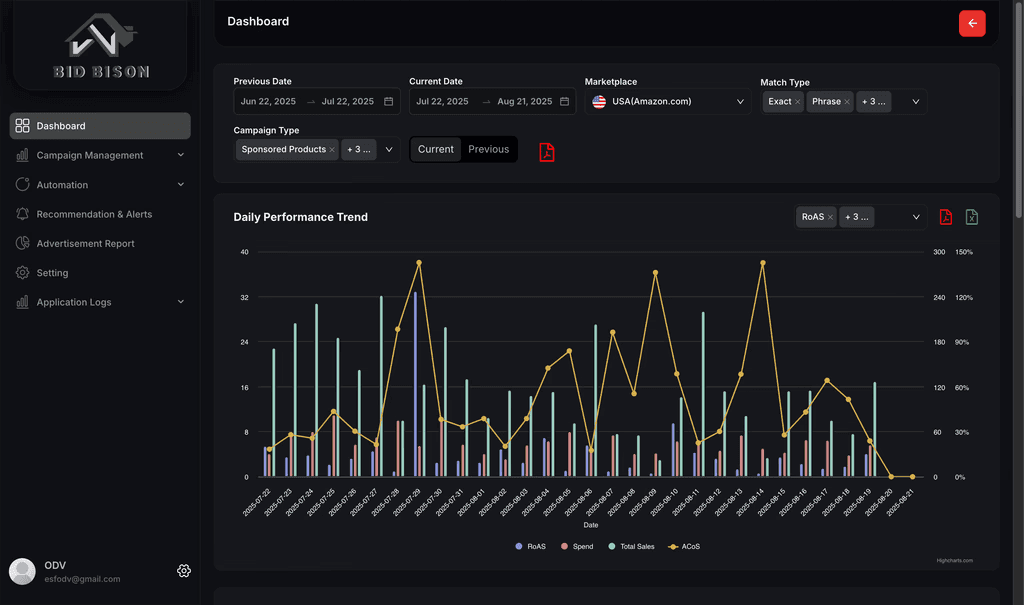
Simple campaign creation and management: Create and manage Sponsored Products, Sponsored Brands, and Sponsored Display campaigns from one place. This reduces setup errors and saves time.
Smarter keyword insights: BidBison highlights relevant, high-intent search terms so sellers understand where traffic is coming from and which keywords actually deserve budget.
Consistent bid management: Bids are adjusted based on real performance signals like conversions and spend. This removes emotional guesswork and keeps optimization steady.
Controlled budget management: Budgets are managed intelligently so that spend flows toward what is working while preventing waste on underperforming campaigns.
Clear performance tracking: All results are shown in one simple view, making it easy to see what improved, what needs attention, and why changes were made.
Supports better decisions, not shortcuts: BidBison does not replace strategy. It helps sellers make confident, informed PPC decisions as their Amazon ads grow.
Final insights
Choosing the right Amazon PPC tool is less about chasing quick wins and more about building confidence in your daily decisions. When ads are managed with structure, small improvements start adding up over time.
For new sellers, the best advertising management software is one that supports learning, protects spend, and helps you act before problems grow. It should guide decisions, not overwhelm you with noise or promises that sound too good to be true. If you are ready to stop reacting to PPC and start managing it with intent, now is the right time to explore a smarter approach.
Take a closer look at how BidBison fits into your workflow, see how it brings clarity to your ads, and decide if it is the right partner for your next stage of growth.

