Winning Amazon ads strategy: Target the right audience for more sales

12 min read
News



TL;DR
Not all clicks turn into sales; targeting the wrong buyers wastes budget and drives up ACoS.
Sponsored Products, Brands, and Display ads give you different ways to reach the right audience when used strategically.
Building a smart targeting strategy means combining keyword intent, layering audiences, and using negative targeting to avoid waste.
Amazon data tools like Brand Analytics and Search Term Reports help spot high-converting keywords and refine campaigns for precision.
Automation and AI tools can cut wasted spend by ~25% and boost RoAS by up to 20%, giving sellers real-time control.
With tools like BidBison, you can simplify Amazon product ads management, reduce manual effort, and scale your business more effectively.
Ever feel like your ads are busy collecting clicks but not enough sales?
The real difference between profitable ads and wasted spend isn’t how much you advertise; it’s whether your ads are reaching the right shoppers. Too often, Amazon sellers burn through their budget by casting the net too wide.
Broad targeting may bring traffic, but it rarely brings conversions. And when ACoS climbs without a clear reason, the problem usually comes down to poor audience targeting. Amazon gives you powerful ways to focus your ads on high-intent shoppers who are ready to buy.
With the right targeting strategy and smarter Amazon advertising PPC management, you can cut waste, lower ACoS, and boost RoAS without increasing spend. This blog breaks down how to target the right audience, avoid wasted clicks, and turn your ads into a real growth engine for your business.
Why customer targeting matters in Amazon ads
As an Amazon seller, you know that every click costs money. But not every click brings you a sale. The quality of the audience you target can be the difference between profitable ads and wasted spend.
When your ads reach the right shoppers, the ones already looking for products like yours, conversion rates go up, and your ACoS and ROAS stay healthy. But if your ads show to the wrong buyers, you pay for clicks that never convert. This is one of the biggest reasons sellers see their ACoS spike without a clear explanation.
For example, let’s say you sell resistance bands. If you target a broad term like “fitness,” your ad may attract clicks from shoppers looking for treadmills or yoga mats, people who won’t buy your product. On the other hand, targeting “resistance bands for beginners” reaches shoppers who are ready to buy, giving you a better chance of turning clicks into sales.
Research shows that 80% of Amazon sales happen on page one of search results, which means targeting the right audience is what gets you visible in those top spots. The better your targeting, the less money you waste, and the more sales you win.
In short, strong customer targeting isn’t just nice to have; it’s the foundation of a profitable Amazon ads strategy.
Audience targeting options with Sponsored Ads
On Amazon, reaching the right customers is about showing up in front of the right shopper at the right time. Each ad type gives you different tools to do that, and when used correctly, they help you cut wasted spend and drive better returns.
#1 Sponsored products: Keyword-driven with match types
These ads are the backbone of Amazon advertising, but their success depends heavily on how you refine keywords. Broad matches might bring traffic, but not always buyers. Phrase and exact match allow you to target customers who are actively searching for your product.
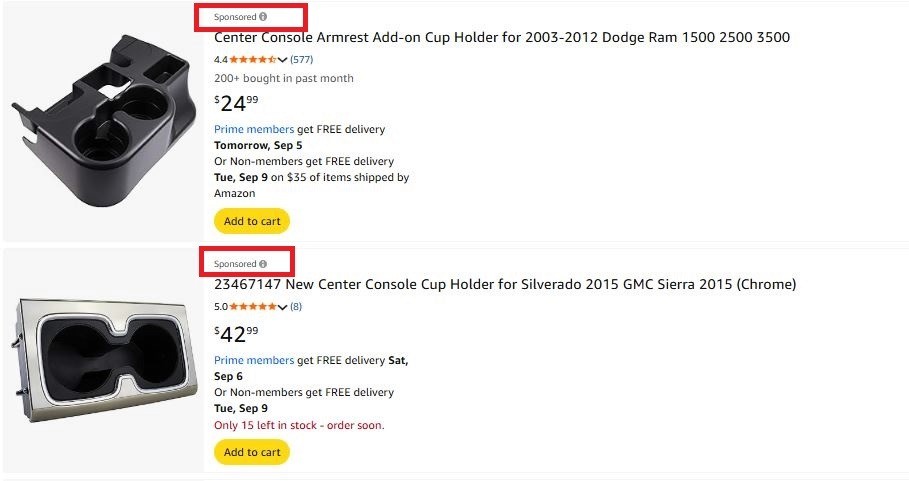
Example of the Sponsored product ad
Research shows that ads optimized with refined keyword targeting can lower ACoS by up to 15% compared to running broad matches alone.
#2 Sponsored Brands: keyword & intent for search
Sponsored Brands go beyond search; they help you capture shoppers at the top of the funnel who are exploring options. They’re perfect for building recognition and loyalty. If someone searches “wireless earbuds,” a Sponsored Brand ad that shows your product line and logo can guide them to your store.

Example of Sponsored brands campaign
These ads are proven to improve brand recall by more than 20%, making them crucial when scaling beyond just single ASIN sales.
#3 Sponsored Display: Direct audience targeting
This is where Amazon gets closest to traditional audience-based advertising. Sponsored Display lets you target shoppers by interest, lifestyle, or even retarget those who viewed your product but didn’t purchase.
According to Amazon ads case studies, remarketing with Sponsored Display can boost conversion rates by up to 30% because you’re re-engaging warm leads who already know your product.
Together, these ad types give you a powerful mix: keywords to capture intent, brand ads to drive awareness, and display targeting to re-engage high-potential customers. Used strategically, they make sure your budget isn’t wasted on the wrong audience but invested in the right shoppers who are ready to buy.
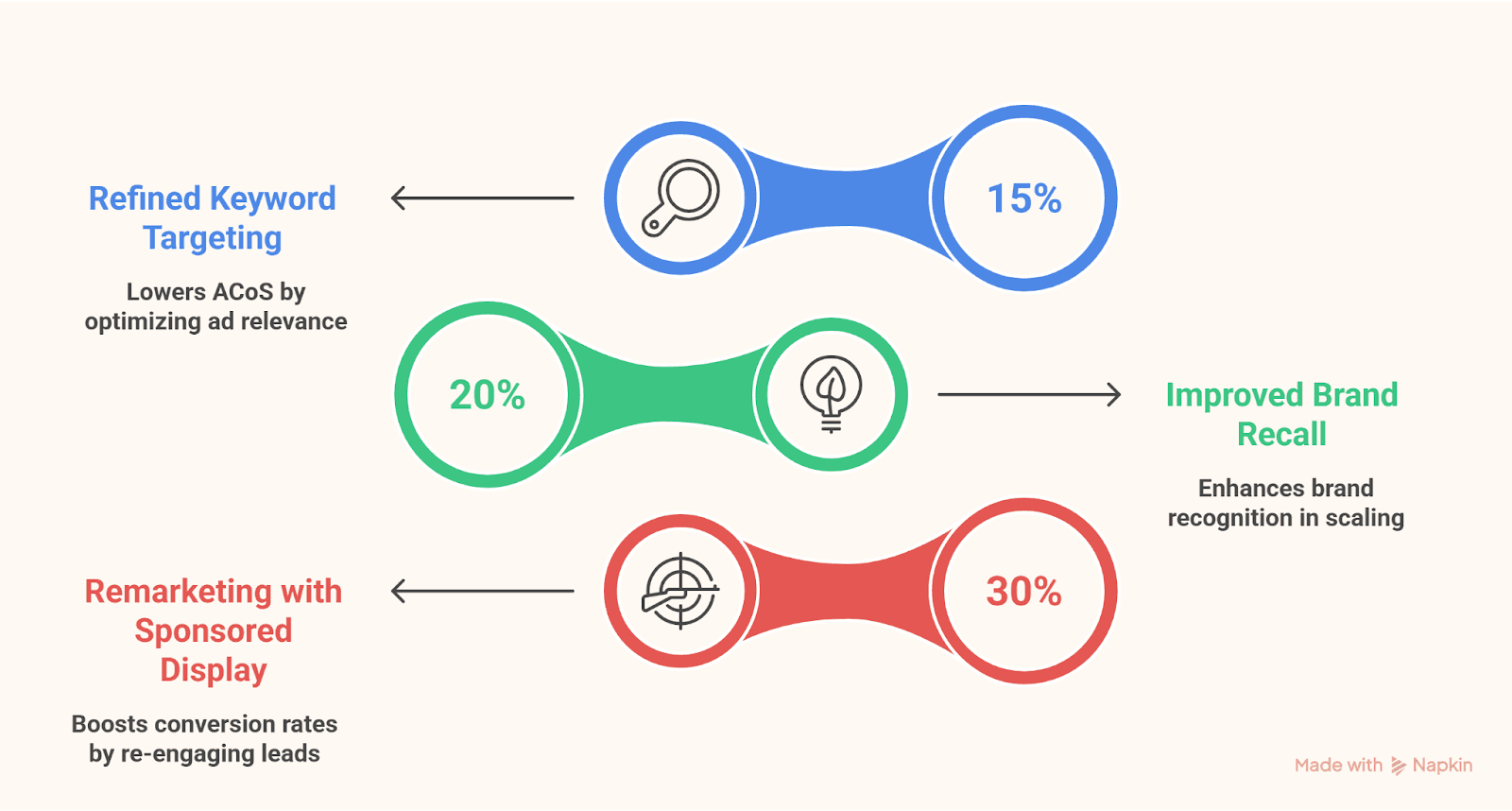
How Amazon ads help you get results
Build a winning targeting strategy
Targeting Amazon ads isn’t about showing up everywhere; it’s about showing up where it matters most. A smart strategy combines keyword intent, audience layers, and negative targeting to make sure your ads reach the right shoppers while avoiding wasted clicks.
1. Start with keyword intent
Every search tells you something about the shopper’s intent. Broad matches can bring in a wide pool of traffic but often include low-quality clicks. Phrase and exact match let you zero in on high-intent shoppers who know exactly what they want.
For example, targeting “wireless earbuds” (broad) may get you clicks from shoppers looking for cases or accessories, while “wireless earbuds with mic” (exact) reaches buyers closer to checkout.
2. Target with Sponsored Display audiences
Keywords alone aren’t enough anymore. Sponsored Display lets you add another layer by targeting in-market shoppers (actively browsing in your category), lifestyle audiences (those with related interests), or even retargeting people who viewed your product but didn’t purchase.
#3 Use negative targeting to cut waste
Equally important is what you don’t target. Negative keywords help filter out irrelevant searches, so you don’t spend money on clicks that will never convert. For instance, if you sell premium leather wallets, adding “cheap” as a negative keyword ensures your ads don’t show to bargain hunters who aren’t your ideal customers.
When these three elements work together, smart keyword intent, layered audiences, and negative targeting, you build a strategy that maximizes ad spend, protects margins, and keeps your ads focused on the right customers.
Use data to refine your audience
Running ads is only half the job; refining your audience with data is what separates profitable campaigns from wasted spend. Amazon gives sellers powerful tools like Brand Analytics, Search Term Reports, and Category Insights, and when used correctly, they can completely change how you target customers.
Amazon Brand Analytics gives you a clear view of shopper behavior. You can see what customers are searching for, which brands they’re buying, and where your products rank in those searches. This helps you identify new opportunities and spot areas where competitors are capturing attention.
Search Term Reports are a goldmine for campaign optimization. They show exactly which customer searches are bringing clicks and conversions.
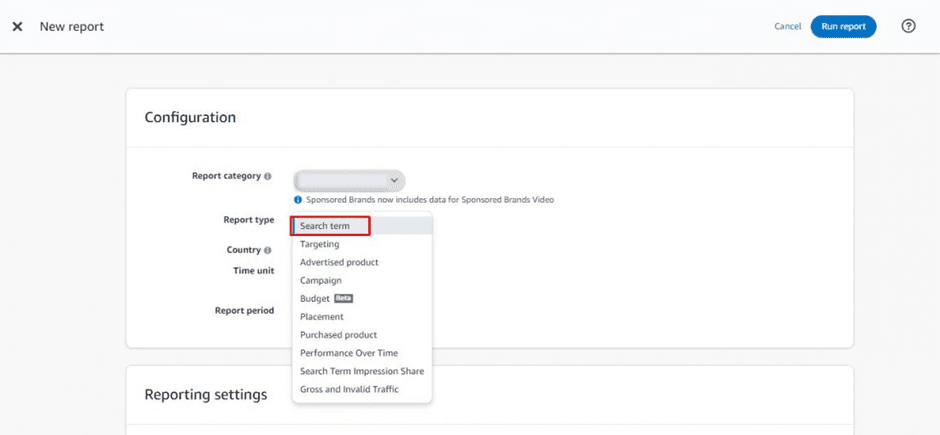
Amazon search term report
Category Insights reveal bigger trends in your market, like seasonal spikes or rising product niches. If you sell supplements and see that “vegan collagen” is growing fast, you can target those shoppers before the competition.
Going a step further, data such as demographics (age, gender, location) and repeat purchase behavior can help you refine your campaigns even more. For example, if your reports show that repeat buyers are mostly women aged 25–34, you can tailor your ads and copy to that exact audience.
Using data this way ensures you’re not just throwing ads out broadly; you’re making smarter, data-driven decisions that keep your spend efficient and your sales growing.
How Sponsored Ads automation tools help
Every Amazon seller knows the grind, hours spent adjusting bids, moving budgets around, and checking if yesterday’s keywords still perform today. By the time you catch an underperforming keyword or overspending campaign, the damage is already done.
Automation means your ads are optimized in real time. Instead of waiting for you to log in and make changes, AI tools can instantly adjust bids, reallocate budgets, and focus spend where it matters most.
Case studies show that automation can cut wasted spend by nearly 25% and lift RoAS by up to 20%. For sellers, that’s not just numbers; it’s the difference between ads draining your margin and ads fueling your growth.
This is exactly the problem we built BidBison to solve. Sellers often tell us they’re tired of juggling spreadsheets, losing money on the wrong keywords, or missing profitable search terms that competitors scoop up. BidBison takes care of those pain points:
Discover the right keywords so you’re not wasting time on endless research.
Launch and manage campaigns easily without worrying about setup mistakes.
Smart bidding & budget control that keeps your ACoS in check while maximizing profitable clicks.
Track and grow with insights so you know exactly what’s working and what needs attention.
Get real-time alerts before small issues turn into expensive problems.
With BidBison, you spend less time fixing ads and more time growing your Amazon business.
Wrap up
The takeaway is simple: targeting the right audience makes the difference between ads that just spend money and ads that actually drive sales. If you’ve been struggling with wasted clicks, unstable ACoS, or missed keyword opportunities, it’s a sign your approach needs to change.
Smarter targeting and automation can help you cut spend, improve RoAS, and free up time to grow your business. Sellers are already turning to the Amazon product ads management tool to gain that edge.
With solutions like BidBison, you can finally move past manual work and focus on scaling.
Ready to see the difference? Start today.

