Automatic Amazon Search Term Harvesting – BidBison
Search-Term Harvesting

Amazon Keyword Automation That Never Sleeps

BidBison mines your Auto and Broad campaigns for the search terms that actually converted, then surfaces them so you can promote winners and block waste in bulk.

Why it matters

Broad and Auto campaigns hide your best keywords.

Every Auto and Broad campaign is quietly testing search terms you haven't targeted directly yet. Left alone, the winners stay buried and the losers keep spending.

  • Search-term harvesting - promote proven terms from Auto and Broad into exact or phrase keywords.
  • Automatic negative flagging - spot wasteful terms and add them as negatives across campaigns in bulk.
  • Shopper-query visibility - see the real searches behind every keyword and product target.

Search term harvest

415 matching terms
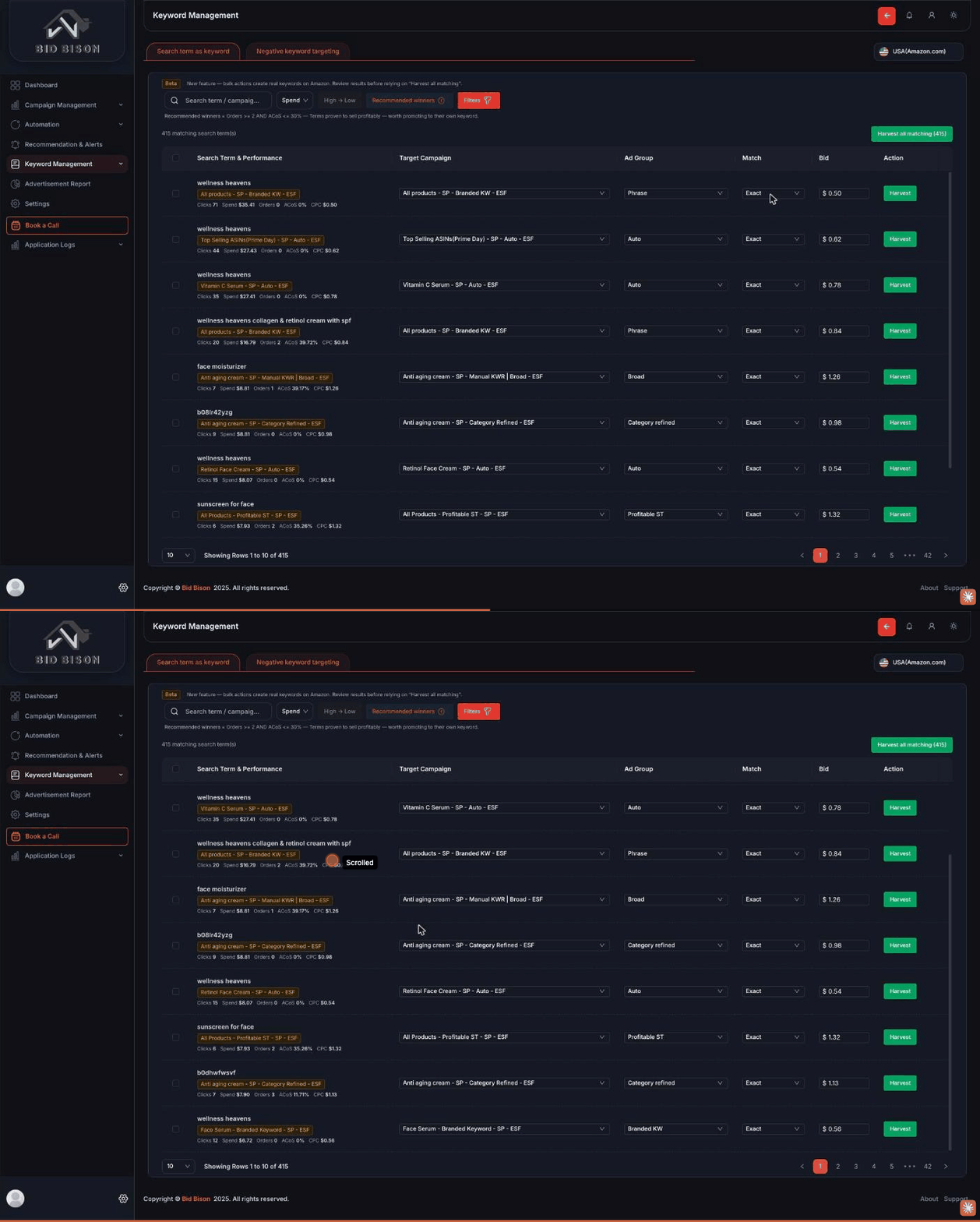
Search-term harvesting table with recommended winners and one-click harvest into keywords
The workflow

Harvest, promote, negate.

1

Harvest

BidBison scans Auto and Broad search-term reports for terms with real conversion history.

2

Promote

Proven terms are surfaced for promotion into exact or phrase-match keywords with their own bid control.

3

Negate

Terms that spend without converting are flagged and added as negatives in bulk, closing the leak.

In detail

The harvest, promote and negate loop in practice.

The three jobs, in order

Harvest. Every converting customer search term from your automatic and broad campaigns is a candidate to become its own target. The engine watches clicks, orders and conversion rate at the search-term level and promotes the terms that clear a threshold you control — not the ones that merely got traffic.

Promote. A promoted term is added as an exact-match keyword in the campaign you nominate, with a starting bid derived from what it already cost to convert rather than a flat default. Getting that starting bid wrong is why manual harvesting so often produces a keyword that immediately underperforms the search term it came from.

Negate. The step most sellers skip. Once a term is exact-matched in its own campaign, it should be negated in the discovery campaign that found it — otherwise your two campaigns bid against each other and your CPC rises for no additional sale. Non-converting terms with enough clicks to be judged get negated too.

Thresholds that stop it firing too early

Harvesting on a single order is how accounts fill up with keywords that never convert again. The engine waits for enough clicks to make the conversion rate meaningful and for the term to be profitable at your target, then promotes. Negation works the same way in reverse: a term needs a clear run of clicks without an order — assessed against the product's own conversion rate, not a universal number — before it is excluded.

On a typical account, expect roughly two weeks before the first meaningful promotions, and a steady trickle thereafter rather than a flood. If a tool promotes fifty keywords in its first week, it is guessing.

A worked example

An automatic campaign spends $180 over three weeks on the search term "stainless steel travel mug 20oz" and returns 11 orders at a 9.4% conversion rate — an ACoS of 21% against a 38% break-even. The engine promotes it as an exact-match keyword into the nominated manual campaign at a bid derived from its actual winning CPC, then adds it as a negative exact in the automatic campaign. The discovery campaign keeps hunting; the proven term now sits where you can bid on it deliberately.

In the same period, "coffee thermos for hiking" takes 46 clicks and $61 with no orders. It is negated, and that $61 a month stops leaving the account.

What stays under your control

  • Which campaigns are allowed to harvest, and which campaign promotions land in.
  • Match type for promoted terms, and whether phrase variants are created alongside exact.
  • Click and profitability thresholds for both promotion and negation.
  • A protected list — terms that are never negated, which is where brand names belong.

Every promotion and negation is logged with the data behind it, so a weekly review takes minutes and any single change can be reverted.

Why manual harvesting fails at scale

The work itself is not hard; the cadence is. Doing it properly means reading search-term reports for every campaign every week, cross-checking against existing keywords to avoid duplicates, and remembering to negate. At ten campaigns that is an afternoon. At sixty, across four marketplaces, it stops happening — and the cost shows up as a slowly rising CPC that nobody can point at a cause for.

Last reviewed 1 September 2026 by the eStore Factory advertising team.

Questions

Harvesting, answered.

What is Amazon search-term harvesting?
Search-term harvesting is the process of finding customer search terms that converted inside broad-match or automatic campaigns, then promoting those terms into their own exact or phrase-match keywords for tighter control.
How does BidBison decide what to promote?
BidBison mines Auto and Broad campaign data for search terms with proven conversion performance and surfaces them for promotion, while flagging terms that spend without converting as negative-keyword candidates.
Is harvesting done automatically or do I approve it?
BidBison surfaces harvested terms and negative candidates for review, and can apply them in bulk across campaigns once you confirm the workflow you want.
How long before harvesting produces results?
Roughly two weeks on a typical account. The engine waits for enough clicks to judge conversion rate reliably, so early weeks are quiet by design. A tool that promotes dozens of keywords in week one is guessing.
Will it add keywords I do not want?
You control which campaigns can harvest, where promotions land, the match types created, and the thresholds. There is also a protected list of terms that are never negated — brand terms belong there.
Does it negate in the campaign that found the term?
Yes. Once a term is exact-matched in its own campaign it is negated in the discovery campaign, which stops your own campaigns bidding against each other and inflating CPC.
What happens to non-converting search terms?
Terms with enough clicks and no orders — judged against the product's own conversion rate rather than a fixed number — are negated, and each negation is logged with the data behind it.
Can I review changes before they go live?
Every promotion and negation is logged with its reasoning and can be reverted individually. You can also run harvesting in a review-first mode on the campaigns you care most about.

Stop leaving keywords buried in Auto and Broad.

14-day free trial, credit card required. Connect your account and see your first harvest.