Amazon PPC Automation Software That Works – BidBison
Amazon PPC Automation

Amazon PPC Automation Software, Explained Simply

Amazon PPC automation is software that manages bids, budgets, keywords and negatives on your Sponsored Ads campaigns so you don't adjust them by hand every day. BidBison runs it as a goal-based autopilot: pick a goal, set a target ACoS, and the strategy engine handles the rest.

Best fit

Who this is for - and who it isn't.

Amazon PPC automation earns its keep once you have enough campaigns that manual daily adjustments cost more time than they're worth, or once ACoS drift is costing you more than a subscription would.

  • Good fit: sellers running multiple SKUs or campaigns who want a target ACoS held automatically.
  • Good fit: teams that want expert playbooks instead of building bid logic from scratch.
  • Not a fit: accounts with one or two keywords and no real optimization surface.
  • Limitation: automation still needs a sensible starting budget and target - it optimizes toward a goal, it doesn't invent one.

Strategy picker

AI Strategy presets
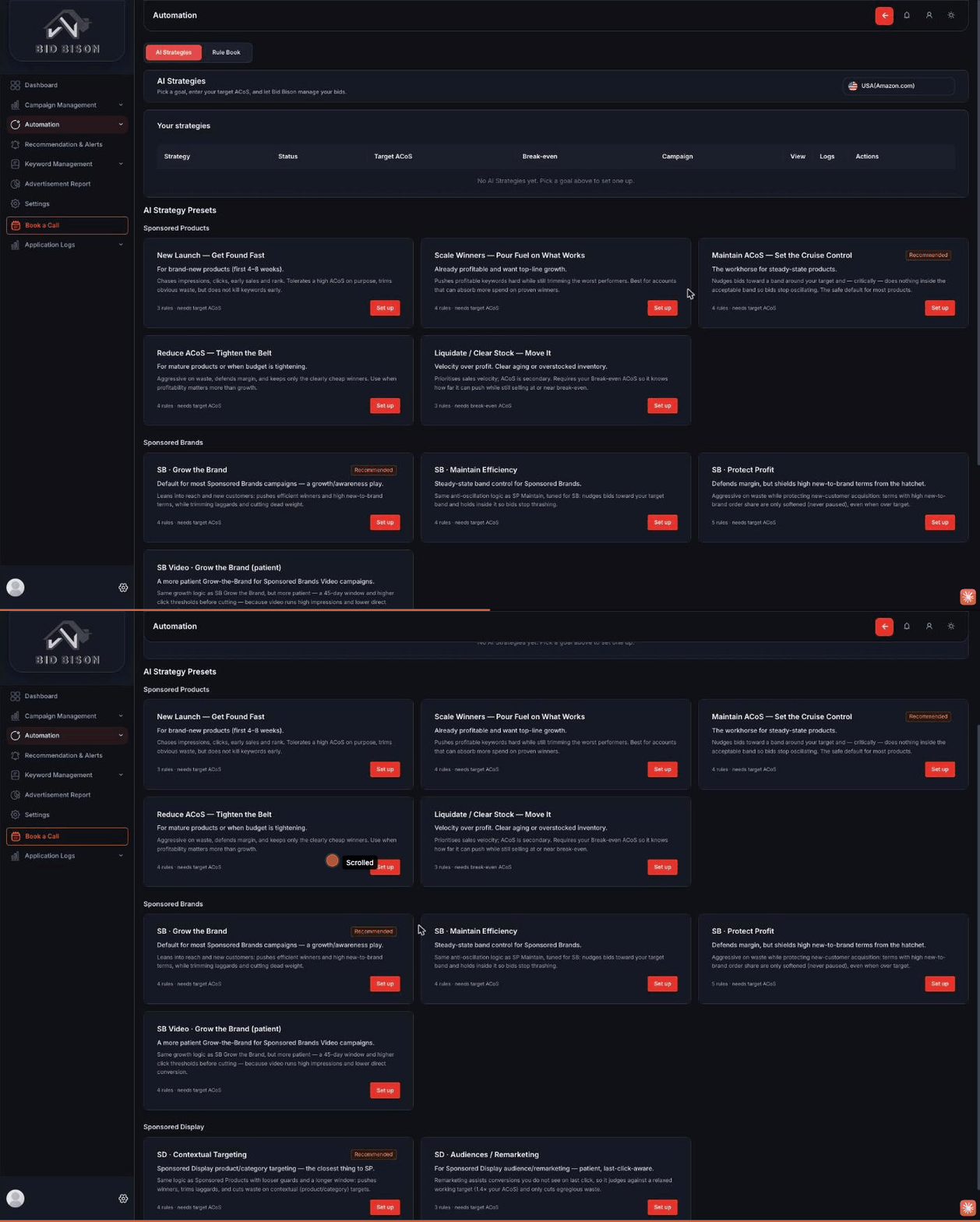
BidBison strategy picker with AI Strategy presets like Maintain ACoS and Scale Winners
What gets automated

Seven things a PPC automation platform should actually do.

These are the categories BidBison automates - each with a dedicated deep-dive if you want the full detail.

Bids

Anti-oscillation bid control keeps bids inside a sensible band instead of bouncing daily. See target ACoS automation →

Budgets

Budget pacing that protects spend from front-loading or starving a campaign mid-day.

Search terms

Harvesting promotes proven terms from Auto and Broad into exact or phrase keywords. See search-term harvesting →

Negatives

Wasteful terms are flagged and added as negatives across campaigns in bulk.

Dayparting

Hourly bid multipliers across all seven days, so spend follows when conversions actually happen.

Alerts

Proactive alerts flag Buy Box loss, out-of-stock spend and more before they drain a weekend's budget. See PPC alerts →

Goal-based playbooks

Automation logic tied to a real outcome, not a generic rule.

Every playbook states who it's for, what it optimizes, and its risks. See the full playbooks library →

In detail

What automation decides, and what it should not.

The four decisions worth automating

  • Bids. The recurring arithmetic of what each target is worth given its conversion rate and your margin. This is where manual management fails first, because doing it well means revisiting thousands of small numbers every week.
  • Budgets. Moving money toward the campaigns with headroom under target and away from the ones above it. Most accounts leave budget sitting in campaigns that cannot use it profitably.
  • Keywords. Promoting converting search terms into their own targets, and negating the ones taking clicks without orders. High-value, universally skipped once an account gets large.
  • Timing. Bidding by hour where hourly conversion rate genuinely varies, and only where volume is high enough for the pattern to be real.

Rules-based versus goal-based automation

Rule-based tools give you a rules editor: if ACoS above 40% for 7 days, lower bid 15%. The logic is transparent, and the maintenance is yours forever — every new product, season and price change means revisiting thresholds. It also produces the classic sawtooth, where a rule cuts a bid, impressions fall, thin data reads well, and the next run raises it again.

Goal-based automation inverts that: you declare the outcome — hold this ACoS, launch this ASIN, clear this stock — and the engine decides the mechanics, keeping bids inside a band and moving them in small steps. You give up direct control of individual thresholds and get stability and far less upkeep. Neither is universally right; the honest question is whether you want to own a rule set or an outcome.

Who automation genuinely suits

  • Sellers past roughly 20 campaigns or two marketplaces — the point at which weekly manual review stops actually happening.
  • Accounts with stable products and thin margins, where a few points of ACoS decide profitability.
  • Teams without a dedicated PPC person, where ads are the third priority of someone's week.

It suits some accounts less well: a single product with tiny spend has too little data for any engine to learn from, and a brand mid-repositioning changes its own conversion rate faster than automation can read it.

What should stay with a human

Structure decisions, launch timing, what a product is worth defending, price changes, and anything driven by information that is not in the ad data — an inventory gap, a competitor's promotion, a review crisis. Automation is good at the recurring arithmetic and blind to context. The right split is that it handles the thousand small decisions and surfaces the handful that need you, which is what the alerting exists to do.

What to expect in the first month

Bid activity within 24 hours, mostly small corrective moves. A readable ACoS trend at two to three weeks, once Amazon's 14-day attribution window has settled. First meaningful search-term promotions around week two, then a steady trickle. Total spend often stays similar in month one while its distribution changes substantially — that redistribution, not a spend cut, is usually where the ACoS improvement comes from.

Last reviewed 1 September 2026 by the eStore Factory advertising team.

Questions

Automation, answered.

What is Amazon PPC automation?
Amazon PPC automation is software that adjusts bids, budgets, keywords and negatives on Sponsored Ads campaigns based on performance data, instead of a person doing it manually. BidBison automates this around a goal you pick and a target ACoS you set.
Is Amazon PPC automation the same as rule-based bidding?
No. Rule-based bidding requires you to configure every condition yourself. BidBison ships expert-built playbooks for common goals, with a custom Rule Book available when you want to configure your own logic.
Who should not use Amazon PPC automation?
Sellers who want to manually control every single bid change, or who run only a handful of keywords with no real optimization need, may not see much benefit from automation.
Does automation replace an Amazon PPC specialist?
It replaces the repetitive daily bid and budget adjustments. Strategic decisions - like which goal fits a product's lifecycle - still benefit from expertise, which is why BidBison also offers a Done for You service run by eStore Factory specialists.

Pick a goal and let the engine run.

Start your 14-day free trial, credit card required. Or talk to our team about the Done for You service.