Which Is the Best Amazon PPC Software in 2026?
Six tools compared, the features that matter, the main pricing models, and how to test a tool before you switch.
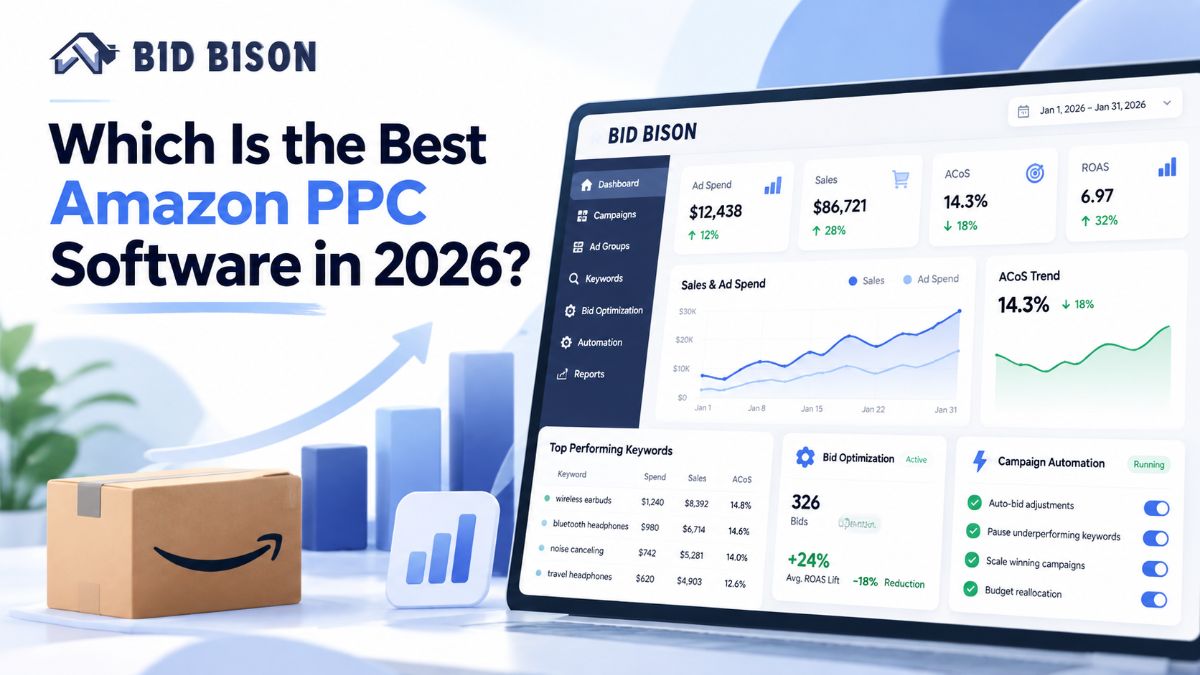
The best Amazon PPC software is a tool that automates bids, budgets, keywords, and reporting around your target ACoS while you stay in control. For most sellers, BidBison fits that definition, because it manages bids, budgets, keyword actions, dayparting, and reporting automatically.
What Is Amazon PPC Software?
Amazon PPC software is a tool that connects to your Amazon Ads account and manages campaigns for you. It adjusts bids, controls budgets, finds keywords, and reports results, so you do not have to make every change by hand.
PPC means pay-per-click. You pay Amazon each time a shopper clicks your ad. Amazon Ads supports Sponsored Products, Sponsored Brands, and Sponsored Display campaigns.
Managing these campaigns manually works at 10 SKUs. It breaks down at 100. An Amazon PPC management tool exists to handle that scale. For the fundamentals, read what Amazon PPC software is and how it works.
How Does Amazon PPC Automation Software Work?
Amazon PPC automation software pulls performance data through the Amazon Ads API, compares it against your goals, and applies changes automatically. It raises bids on profitable keywords, lowers bids on weak ones, and shifts budget toward campaigns that perform.
The process usually follows these steps:
- Connect your account. You authorize the software through Amazon's API.
- Set a goal. Most sellers set a target ACoS (Advertising Cost of Sale: ad spend divided by ad sales).
- Software analyzes data. It reviews clicks, orders, spend, and search terms.
- Changes apply automatically. Bids, budgets, and keywords update on a schedule or in near real time.
- You review reports. You check results and adjust goals.
For the detailed cycle, see how Amazon PPC automation software works.
Rule-Based vs. AI Amazon PPC Software
Rule-based tools follow "if this, then that" instructions you write. AI Amazon PPC software adjusts decisions from data patterns, with less setup from you.
Rules give you control but need constant tuning. AI-driven automation reduces manual work but should still be transparent. Always check that you can see what changed and why. Read more in AI vs rule-based Amazon PPC software.
Which Is the Best Amazon PPC Software in 2026?
The best Amazon PPC software depends on your size and goals, but the strongest tools share four traits: full automation, target-ACoS control, clear reporting, and responsive support. BidBison covers all four for sellers, brands, and agencies.
Here is how common options compare. Check each vendor's website for current features and pricing before you decide.
| Tool | Best For | Automation Focus |
|---|---|---|
| BidBison | Sellers, brands, and agencies wanting target-ACoS automation | Bids, budgets, keywords, dayparting, reporting |
| Helium 10 Adtomic | Sellers already using Helium 10 | Bid and campaign automation |
| Perpetua | Brands focused on Amazon advertising | AI-driven bidding and optimization |
| Pacvue | Large brands and enterprise teams | Multi-channel retail media management |
| Teikametrics | Sellers wanting ads plus marketplace tools | Ad optimization and growth tools |
| Quartile | Larger advertisers | AI-led ad management |
For price-by-price detail at the same ad spend, see the BidBison comparison hub and the Amazon PPC software comparison 2026.
How to Evaluate the Best Amazon PPC Software
Use these five criteria on any tool:
- Automation depth: Does it handle bids, budgets, keywords, and schedules, or only bids?
- Goal alignment: Can it optimize toward your target ACoS?
- Transparency: Can you see every change and the reason for it?
- Reporting: Are reports clear enough to share with a client or team?
- Support: Can you reach a real person when something breaks?
For campaign basics, read the official Amazon Ads Sponsored Products guide. For a fuller scoring sheet, use the 9-point Amazon PPC software checklist.
What Features Should an Amazon PPC Management Tool Have?
An Amazon PPC management tool should automate bids, budgets, and keywords, support dayparting, protect spend with negative keywords, and deliver clear reporting. These features cover the daily work that drives ACoS and sales.
Must-Have Features
- Bid automation: Adjusts keyword and target bids based on performance.
- Budget management: Moves budget to campaigns that convert and limits waste.
- Amazon keyword automation: Finds converting search terms and adds them to manual campaigns. This is called keyword harvesting.
- Negative keyword automation: Blocks search terms that spend without selling. See Negative Keywords 101.
- Dayparting: Changes bids or budgets by hour or day, based on when your customers buy. See dayparting for Amazon Ads.
- Reporting: Shows ACoS, TACoS, ROAS, spend, and sales by campaign, product, and keyword.
- Multi-account support: Matters for agencies and multi-brand owners.
Nice-to-Have Features
- Custom rules alongside automation
- Alerts for budget caps and sudden ACoS spikes (see Amazon PPC alerts)
- Client-ready report exports
- Support for all three Amazon ad types
Why Choose BidBison?
BidBison is Amazon PPC automation software that automates bids, budgets, keywords, dayparting, and reporting around your target ACoS. It is built for sellers, brand owners, agencies, and PPC professionals who want consistent optimization without daily manual work.
What BidBison Automates
- Bids: Adjusted toward your target ACoS.
- Budgets: Directed to campaigns that perform.
- Keywords: Discovered, added, and managed automatically.
- Dayparting: Spend aligned with high-converting hours.
- Reporting: One place to track results.
Mini Example
This is an illustrative scenario, not a customer result. Consider a seller with 150 SKUs and a 25% target ACoS. Manually, they review search term reports weekly and miss mid-week waste. With automation, bids and negative keywords update continuously against that 25% target.
The result is faster fixes and fewer hours spent in spreadsheets. Explore the full Amazon ads management platform to see each feature in detail.
How Do You Choose the Right Amazon Ads Management Platform?
Choose an Amazon ads management platform by matching it to your ad spend, catalog size, and team. Define your goal, shortlist tools, test one on a limited set of campaigns, and compare results against your manual baseline.
Follow these steps:
- Define your goal. Pick one: lower ACoS, grow sales, or save time.
- Record your baseline. Note current ACoS, TACoS, spend, and weekly hours spent on PPC.
- Shortlist two or three tools. Use the five criteria above.
- Run a controlled test. Apply the tool to a set of campaigns for 30 to 60 days.
- Compare results. Check ACoS, sales, and time saved against your baseline.
- Scale what works. Expand to the full account.
Most tools connect through the Amazon Ads API, so confirm that any vendor you shortlist uses it.
Software vs. Agency
Software costs less and works continuously, but you own the strategy. An agency brings strategy and execution but costs more. Many brands use software for execution and an agency or in-house expert for direction. See how to choose an advertising agency for Amazon, or BidBison's Done for You service.
How Much Does Amazon PPC Software Cost?
Amazon PPC software cost varies by pricing model. Common models are flat monthly fees, tiered plans based on ad spend, and a percentage of ad spend. Always compare total cost against the ad spend you manage.
| Pricing Model | How It Works | Best For |
|---|---|---|
| Flat monthly fee | Fixed price per month | Predictable budgets |
| Tiered by ad spend | Price rises with spend bracket | Growing sellers |
| Percentage of ad spend | Fee is a share of managed spend | Smaller or variable budgets |
Judge price by return. A tool that costs more but removes wasted spend can pay for itself. For BidBison plan details, visit the BidBison pricing page.
Pro Tips and Common Mistakes
The most common PPC software mistake is setting a target ACoS without knowing your margins. Break-even ACoS equals your profit margin before ad costs. Set targets below it, or you lose money on every sale. The ACoS calculator does the math for you.
Pro Tip
Set different target ACoS values by goal. Use a higher target for new product launches and a lower one for mature, profitable products. Review TACoS (total ad spend divided by total sales) monthly to see how ads affect overall growth.
Common Mistakes to Avoid
- Setting one ACoS target for every product. Margins and goals differ.
- Changing settings too often. Give automation 7 to 14 days of data before judging.
- Ignoring search term reports. Even with automation, review them monthly.
- Skipping negative keywords. Wasted clicks add up quickly.
- Judging by ACoS alone. Watch sales volume, TACoS, and profit too. See ACoS vs TACoS.
- Picking a tool by price only. Support and transparency matter.
Conclusion
The best Amazon PPC software automates repetitive work, keeps spend tied to your target ACoS, and gives you reports you can trust. BidBison does this across bids, budgets, keywords, dayparting, and reporting.
Next step: Start with a limited set of campaigns, record your baseline, and compare results. Book a BidBison demo or start your free trial and see the difference on your own account.
Frequently asked questions
What is the best Amazon PPC software?
Is Amazon PPC automation software worth it?
How does AI Amazon PPC software work?
How much does Amazon PPC software cost?
Which Amazon PPC management tool is best for small sellers?
Automation that explains every change.
Bids, budgets, keywords and dayparting around your target ACoS. 14-day free trial, credit card required.